It worked. The bundle was 480KB. Bug velocity slowed every quarter. Then traffic hit her, eight times the volume in a single quarter, and the engineering bill climbed faster than revenue.
Service React development services · React 19 · UK
React development for the SaaS that doesn’t need a rewrite. just someone who’s shipped 78.
Your React app doesn’t need another framework. It needs someone who knows when Concurrent rendering helps and when it tears your UI apart — a UK senior team for React 19 SPAs, design systems, and embedded widgets. We pick the renderer based on what your auth-walled dashboard actually needs, not what your last agency pitched.
78React apps shipped since 2019
800msLCP p75 in production
14week sprint
(Why CTOs sign)
You don’t need another React 19 team. You need engineers who’ve shipped 78 React 19 apps and watched what breaks at scale.
A React app is a system that has to operate under real traffic, not a demo that looks good in a screen-share. We build for the day your usage doubles, not the day you ship the slide.
0
<800ms
0
The CTO this page is for480KB bundle · 8× traffic · bill climbing
Eleanor’s SaaS shipped on React 18, class components, an over-eager Redux store.
Latency drifted. The CEO asked the obvious question: “Why is the new build slower than the thing we replaced?” Nobody on the team had a clean answer, because the architecture was built for the brochure version of the product.
We migrated to React 19 with typed Server Components, replaced Redux with the modern pattern, shipped the rebuild in ten weeks. Bundle dropped to 110KB. Bug velocity halved. This page is for CTOs who recognise themselves in that paragraph.
React renderer economics
The renderer ladder
Vite or Next or Remix isn’t a religious choice. It’s a workload question. We pick per workload and write the migration path into an ADR so your next engineer doesn’t inherit a guess.
Rung 01
Vite for SPAs + dashboards
Auth-walled internal tools where SEO doesn’t matter. Fast HMR, lean build, no server runtime to babysit.
Rung 02
Next.js for content + SEO
Public pages, marketing surfaces, anything that needs server components and edge caching to rank.
Rung 03
Remix for nested data
Heavy nested data-fetching with progressive enhancement. Loaders and actions over a tangle of effects.
Rung 04
TanStack Start when it fits
Type-safe routing and server functions with the TanStack data layer your team already knows.
Rung 05
Astro for content sites
Mostly-static content with islands of React. Ship near-zero JS where the page doesn’t need it.
Rung 06
The decision lives in an ADR
Whatever we pick, the reasoning and the migration path ship in writing. No renderer is a one-way door.
The stack we ship every React 19 build on.
React 19 plus the renderer your workload needs, typed end to end. The rest is the boring, hireable, production-grade layer that keeps the app up.
T1
What every React 19 build runs on
React 19React 19Next.js / Vite / RemixTypeScriptTailwind CSSTanStack Query + ZustandReact Hook Form + ZodVitest + PlaywrightStorybook + ChromaticSentryMixpanelClerk / Auth0Resend
T2
When your React 19 brief calls for it
reach when neededPythonJavaGoGraphQLtRPCDrizzle / Prisma
T3
The infrastructure layer
AWS-defaultAWSCloudFrontCloudflareAWS LambdaS3 + CloudFrontAWS RDS / AuroraMongoDB AtlasRedisInngest / Trigger.devTerraformDatadog + SentryGitHub Actions
React 19 foundations.
Day one, not month ten.
Every React 19 app we’ve shipped since 2019 makes the same six load-bearing decisions before a feature gets written. Each one is hard to retrofit. Open any row.
Concurrent rendering, transitions, useDeferredValue, Activity boundaries. Small and volatile, not whole-route. We wire Suspense where it earns its keep and nowhere it tears the UI.
Server state in TanStack Query, ephemeral UI in Zustand, form mutations in useActionState plus useOptimistic. You stop running Redux, SWR, Query and Zustand simultaneously.
Vite for SPAs, Next for SEO, Remix for nested data. The decision and its migration path live in an ADR, so no renderer is ever a one-way door.
Performance is a build-gate, not a sprint-end scramble. Lighthouse perf above 94 is the standard. Bundle and LCP checked on every PR, measured on real traffic.
We adopt Compiler v1.0 the way Meta does it, so we don’t nuke 1,400 useMemo and useCallback calls at once. Incremental, reversible, safe.
Sentry Session Replay plus a trace ID per session. Mixpanel tracks the funnel. On-call replays the exact session and knows what happened in 60 seconds.
React work we do
What we work on
The React 19 surfaces we ship for UK SaaS, fintech, and B2B teams.
62%
Median bundle cut on a rebuild
78+
React apps shipped since 2019
“P99 dropped from 1.4s to 180ms. The bill cut a third. Best engagement we’ve paid for.”
001
SPAs + dashboards
Auth-walled internal tools on Vite. Fast HMR, lean build, no server runtime to babysit.
002
Design systems
Storybook plus Chromatic, typed component APIs, visual regression on every PR. A system your next hire trusts.
003
React 16 / 17 to 19 migrations
Behind a flag, zero customer-facing downtime. Suspense and Concurrent adopted incrementally, never big-bang.
004
Embedded widgets
React mounted inside someone else’s page without leaking styles or globals. Shadow DOM where it earns its keep.
005
Performance rescues
Bundle audits, hydration fixes, render-loop hunts. We cut the weight and gate it in CI so it stays cut.
React 19 case study
React 18 class to 19 Concurrent,
React 18 class to 19 Concurrent,
in real numbers
We migrated a React 16 class-component SaaS to React 19 with Suspense, transitions, TanStack Query and Vite. Twelve-week sprint, behind-feature-flag rollout, zero customer-facing downtime. Bundle cut 62%. Time-to-interactive fell from 4.2s to 1.1s on an iPhone SE 2020.
Migration sprint
12 wks
Class Concurrent
0
Customer-facing downtime
Performance
−62%
Bundle size
4.2s1.1s
TTI on iPhone SE 2020
Track record
78
React apps since 2019
99.95%
Uptime SLO held
What CTOs say after we ship
Real lines from UK teams whose React 19 builds we rebuilt or shipped.
100%
would refer us
The bundle dropped 62% and the app finally feels fast on a real phone. Our team ships on Fridays again.
What CTOs actually ask before signing
Pain-first, soft-second.
We default to the patterns the React 19 community has settled on for production: typed end to end, observability from day one, TanStack Query for server state, Suspense placed where it pays. If you have a strong reason to deviate, we’ll discuss it in the audit week. The point is that any senior React hire opens the repo and recognises it.
Vite for SPAs and auth-walled dashboards where SEO doesn’t matter. Next for content and SEO. Remix for nested data-fetching. Astro for mostly-static content. The honest answer is “it depends on the workload”, and the decision lives in an ADR with a migration path so it’s never a one-way door.
Yes. We’ve done it for UK clients in 2025. Your existing backend (Rails, Django, .NET, Java, Go) stays. We build the React 19 layer with typed contracts. You get senior-grade React 19 without rebuilding the backend you already trust.
Annotation mode, the way Meta does it. We don’t flip the Compiler on across 1,400 useMemo and useCallback calls at once. We adopt it incrementally, component by component, so it’s reversible and your team keeps shipping while we go. No big-bang migration, no broken Friday.
30-day walk-away both ways. Milestone billing 25/25/25/25. UK VAT registered, listed on Companies House, shipping since 2019. You’re never more than four weeks at risk of paying for nothing.
Every React 19 project has two senior engineers paired, not one. Every decision goes into an ADR the same day. Mohit reviews every PR. In seven years, two engineers have left mid-project. Both handovers were inside 48 hours, and neither client noticed.
Yes, with mutual agreement. Several of our engineers have moved in-house over the years. The contract has a clean intro fee built to make the transition friction-free, not punitive. We’d rather you had a great in-house team than be locked into us forever.
Yes, with 14 days’ notice. Engineers move to other projects, spend pauses, you resume with 14 days’ notice. No cancellation fee, no restart fee.
In context
Inside the work.
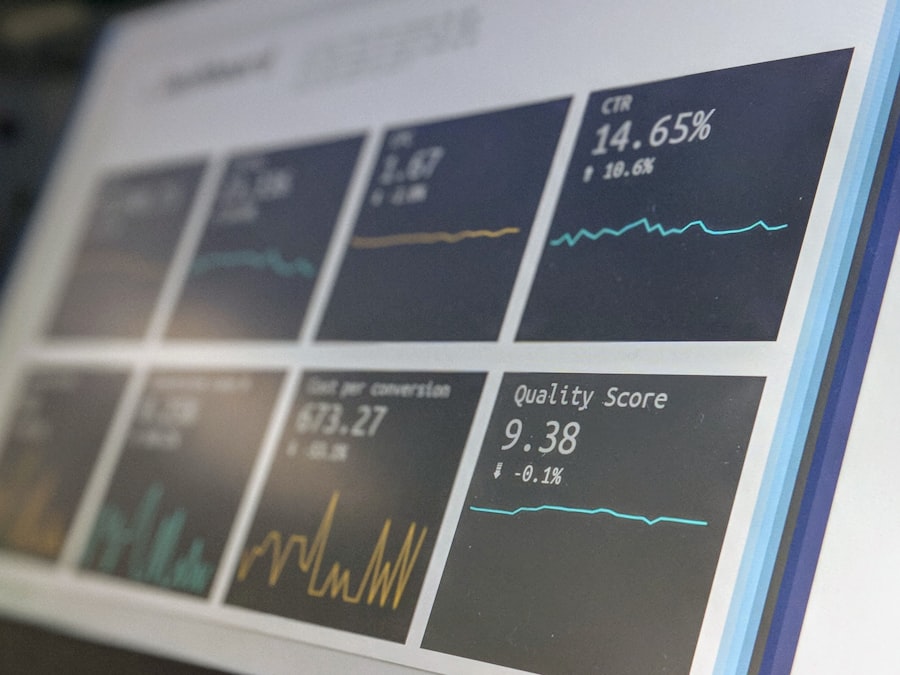
A look at the kind of react development surface we hand over — real screens, real data, documented and yours from day one.
One paragraph. That’s it.
Tell us what the build needs to do, who uses it, and what success looks like. Mohit replies inside 24 hours: a clear yes, a clear no, or the one question that decides it.
What happens after the email lands
- < 24h
A personal reply.
Yes, no, or the deciding question. Straight to your inbox.
- Week 1
Audit week begins.
Render-boundary map, state model, perf budget, signed scope.
- Launch
Holds on Tuesday.
Load-tested to 5× peak. Capacity number in the runbook.